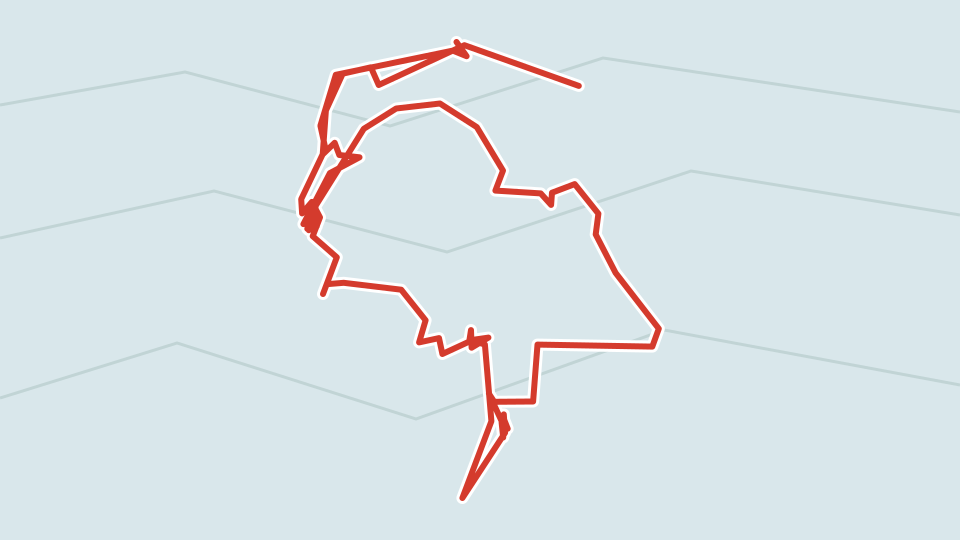
Rhine Falls
The next day, we decided not to go too hard and to check out the nearby Rhine Falls. As the name implies, it's located on the Rhine River, on the border with Germany. By some measures, the waterfall is the biggest in Europe, but measures, as we know, are flexible, especially when marketing is involved. Here we once again ran into the unbelievable convenience of the local transport system. You can get almost anywhere by train; connections always take 2-15 minutes. Rest assured, if a connection is two minutes, the trains will arrive at adjacent tracks. If the train you're on seems to have been delayed, it never happened that the connecting one left on time and left you high and dry. Either it waits, or the time between connections is always perfectly calculated. Since I've started on the topic of railways, I'll continue for a bit more.
The trains vary in their degree of newness and coolness, depending on whether it's an intercity, regional, or local train. At first, we rode trains around Zurich, and it seemed like all the trains here were fancy, like Mercedes, with huge soft seats, info screens, awesome suspension, and soundproofing. But no. The simpler trains rattle, you have to open the doors manually, and there's absolutely no legroom. You can't figure out the route right away; there are no electronic boards on the outside. Nevertheless, they all run on schedule, and there are almost always ticket inspectors everywhere, so fare dodging is extremely risky. The fine is 100 euros, and a repeat offense is even more, and they don't like to joke around. Even if you're formally in the right, the Swiss often act by the book and will write you a fine anyway. I ran into this myself, though not on a train.
Rhine Falls


Swiss prices and Lake Zurich
Rhine Falls, though it was beautiful and didn't disappoint in size, didn't give us a wow effect. We walked all the way around it in a couple of hours, asking for some boiling water for tea at a cafe along the way. Most cafes have a "No picnic" sign, meaning "don't eat the provisions you brought at our tables." But on the bright side, they usually poured us boiling water from the espresso machine for free, and only once did they ask for 1 euro, which is more of a symbolic fee here.
The boiling water from an espresso machine, admittedly, isn't usually boiling, but only about 85-90 degrees, but at least you can brew some oolong.
We had brought a full tea set with us, but it turned out to be more of a hassle than a pleasure. We used it a couple of times, and it weighs close to a kilogram in total.
I keep writing "euro" instead of franc because the exchange rate is very close. It's very convenient. I know that five years ago this was done on purpose, then they unpegged the exchange rate, and the franc skyrocketed. How it is right now, I'm not sure. The Swiss still love cash. And although contactless cards are accepted everywhere, usually all sorts of vending machines take cash too. This is tied to the locals' love for privacy: you'd better not photograph, and especially not record other people, you can get hit with a fine or a lawsuit. In general, this time I had the most dirt-cheap insurance, but next time I'll get one with civil liability coverage. Otherwise, it's kind of sketchy to scratch a Porsche or Ferrari and then pay for it half your life. It has to be said that the locals change cars every few years: cars are usually leased, and if the condition is good, you can give the car back to the bank and get a new one. Everyone does exactly that. Wonder if you can do that with bikes too :-)
I also remembered that in stores at the self-checkout, when you've scanned an item and put it on the little shelf to pick up later, there often aren't any scales on the shelf. And although there's a threatening sign saying they do random checks to make sure you paid for everything, I've personally never seen it happen. We usually bought our groceries at the Co-op chain, far from the cheapest, but the goods there are high quality. The chain is essentially not a company, but a cooperative, meaning a union. Don't confuse it with other co-ops — as it turned out, every country has its own co-op. In Britain, Italy, and so on. In Switzerland, the co-op has an orange-red logo.
By the way, at the robot checkout in Co-op, you don't even have to take a receipt — caring for nature, after all. Co-op really loves this kind of stuff in general, they even get awards for it. I'll add that I liked the "Happy Cola" brand, specifically the tangerine one, sugar-free. Drank it every day. As Garik says: "a bottle of cola in the morning kickstarts the stomach."
What can you do; to get moving somehow, I had to drink brutal amounts of coffee and cola, since having tea on the go wasn't working out. Next time, I'll take my clear mini-thermos-infuser for one person and will beg for boiling water everywhere. The coffee, by the way, is good in some places, for my mainstream tastes — I like a mild latte. The tastiest one, however, I drank at a friend's house, from his espresso machine.
I haven't talked about the prices for food and drinks, so I'll tell you a bit. Eating at a restaurant usually costs around 20-30 francs; that's for a single dish or a combo. A 0.5L bottle of cola or water will easily set you back 3-5 francs, unless you buy it in a supermarket. Then it might be 1.5. The cheapest sandwich or kebab costs around 9-12 francs.
A pair of raw chicken fillet pieces for 15 francs in a supermarket usually makes a strong impression on the psyche of unprepared people. It's interesting that some tourists leave negative reviews for all sorts of places purely because of the prices, for example, for a ski lift. It's a bit weird for me to see this — had these people really heard nothing about Switzerland before their visit?
We walked around the waterfall, crossed it on a little ferry for 4 francs, and headed on. Garik requested another long steamboat ride, and I complied. It's uncool to constantly stare blankly at your phone while planning, but it has its own thrill. You feel like you're remembering something and being useful. So overall I don't mind, as long as my efforts were actually handy and didn't go to waste.
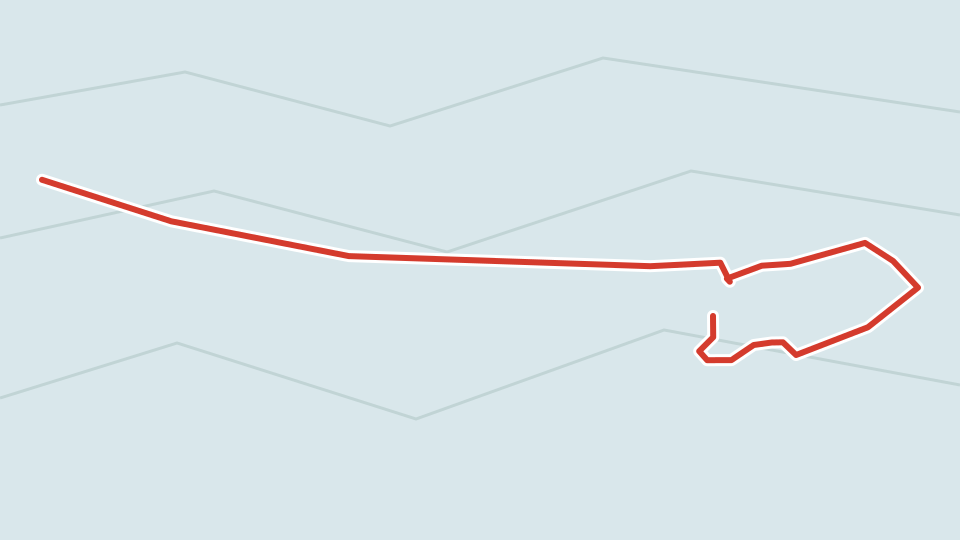
Since there are no big lakes north of Zurich, the only plan that came to my mind was to go to the very east of Lake Zurich (Zürichsee) and sail back from there. To do this, we first had to return to Zurich by train, true, but oh well. We didn't make it to the very west of the lake because it's blocked off by a bridge. We started from the town of Rapperswil-Jona, first to Pfäffikon, then to Ufenau Island. All this in a rush, but it's even more fun that way.
A walk around Pfäffikon and Ufenau Island
We got on a ferry in Pfäffikon that went via Ufenau Island. But first, we took a twenty-minute walk around Pfäffikon. There's a very pleasant alley of tall, dense trees near the pier. Along the way, we hung out with some sheep, and I let them suck some water from a bottle. In Switzerland, agriculture is mixed with the urban environment in a lot of places, meaning a small farm or at least a barn can easily be right near the city center. That's how it turned out here too. The sheep slobbered all over us, but they don't bite hard with their mouths; you can shove your hand into their snout, and it's fine. Also in Switzerland, toilets and drinking fountains are always free, including out on the street, which is very nice. The only paid toilet I saw was at the train station in Zurich, but that makes sense. Even here there are alcoholics and homeless people, albeit not many.
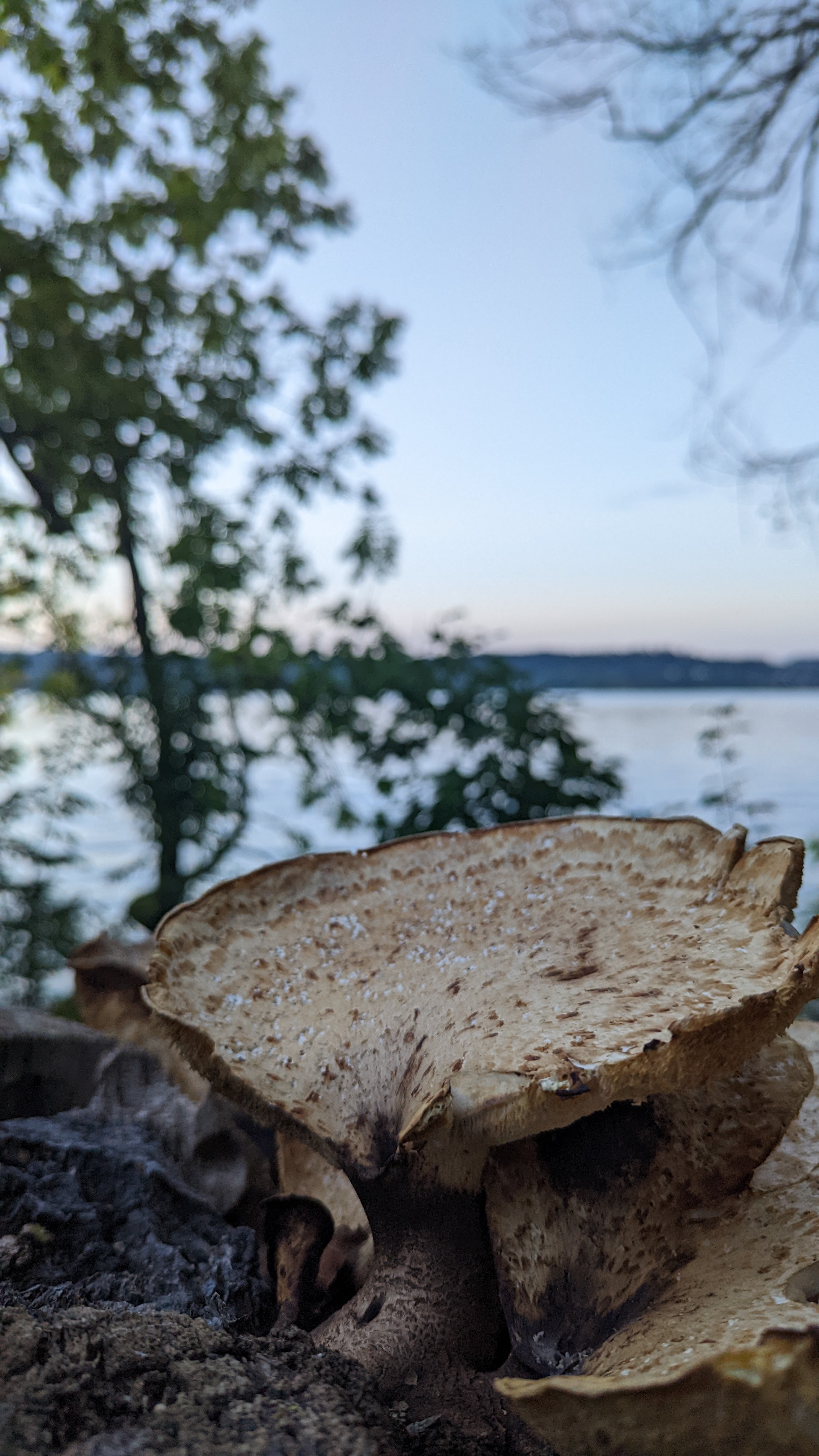
As for Ufenau, the island is small, maybe about a kilometer across. Nevertheless, a vineyard, a restaurant, a cathedral, and a walking trail all managed to fit there. We walked the latter; we had just enough time. You can't swim on the island; there are signs up. But we really wanted to.
In general, there are plenty of rules and bans in Switzerland. For instance, dogs aren't allowed to bark frequently and loudly, and they have to be specially trained for this. Every few months the dog is taken in for a check-up to ensure it behaves properly, like a true Swiss. At the same time, for five years now, devices that automatically punish a dog for barking have been banned (shock collars, etc.).
If you can't control your dog, you'll eventually be fined. And if it happens constantly, they might confiscate it by court order. To avoid this, the Swiss collect evidence that they are training the dog with a dog trainer, that it doesn't bark that much, that complaints from neighbors are infrequent, or non-existent, and so on. All this is taken into account in court or in police disputes. There's this thought that because everything is a bit too good in Switzerland, but a bit boring, the locals entertain themselves by squabbling with their neighbors. They write official letters, looking for excuses to nitpick at something else. It's a sort of traditional hobby, alongside hiking and skiing. And smoking, apparently.
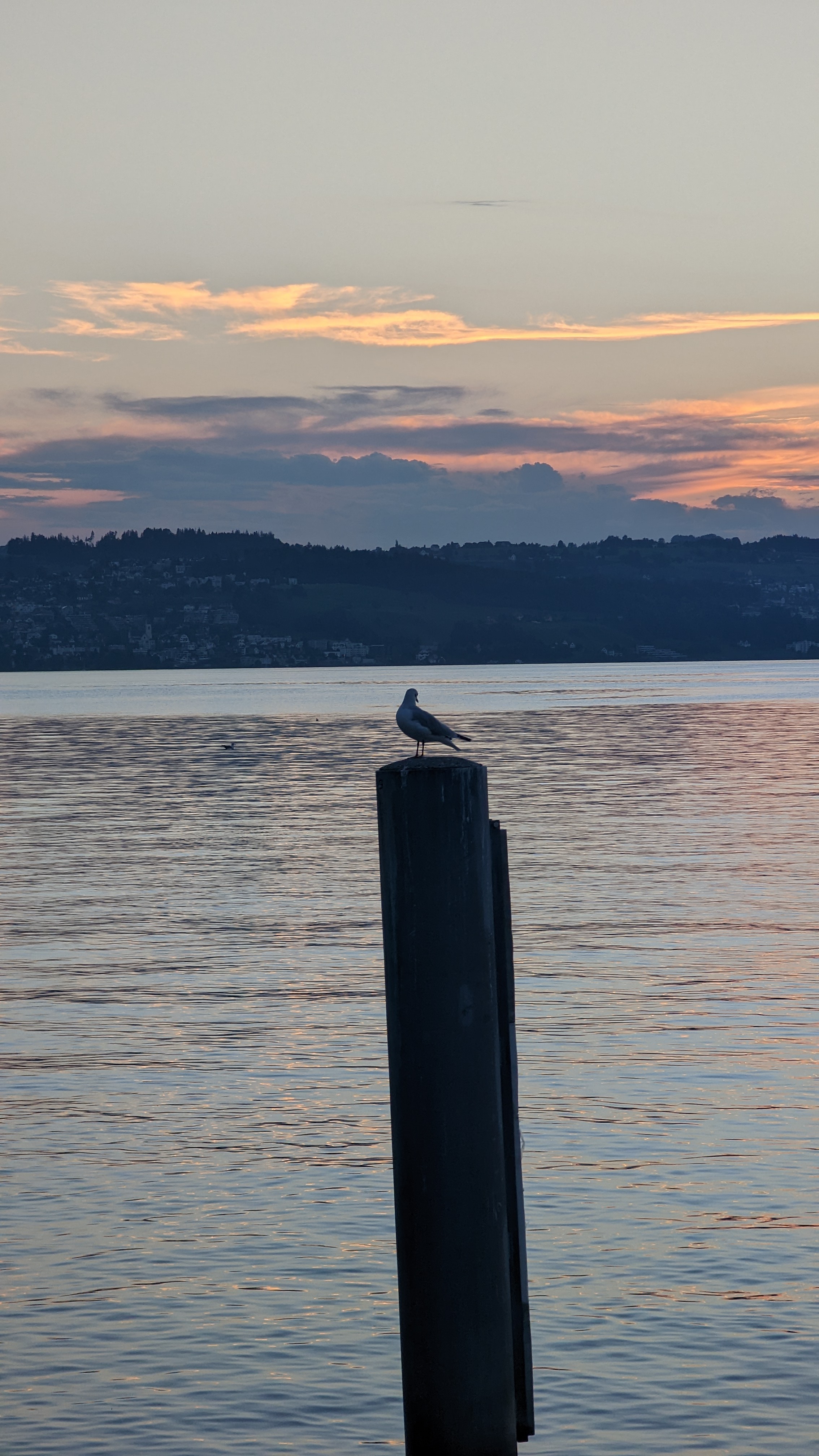
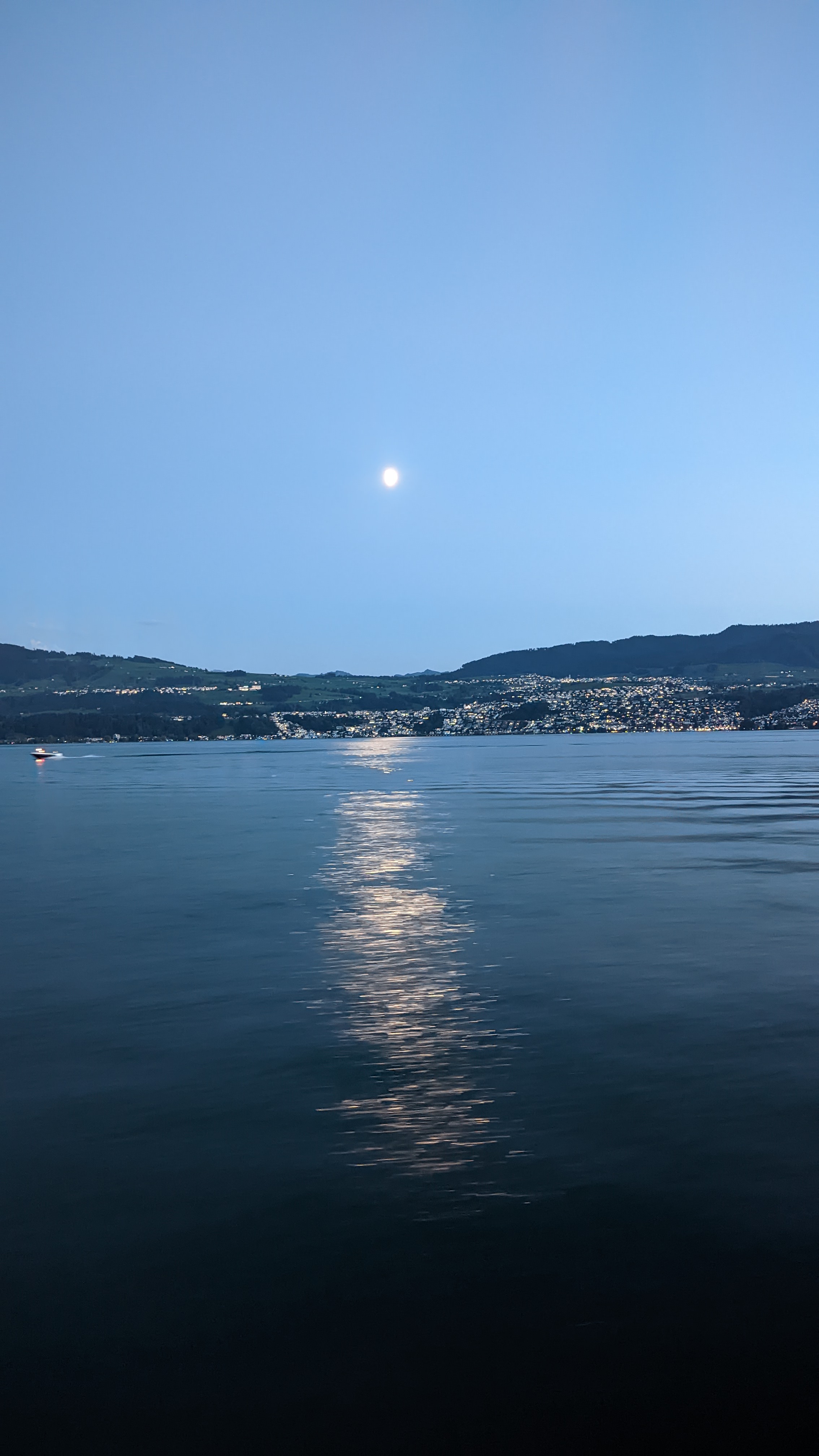
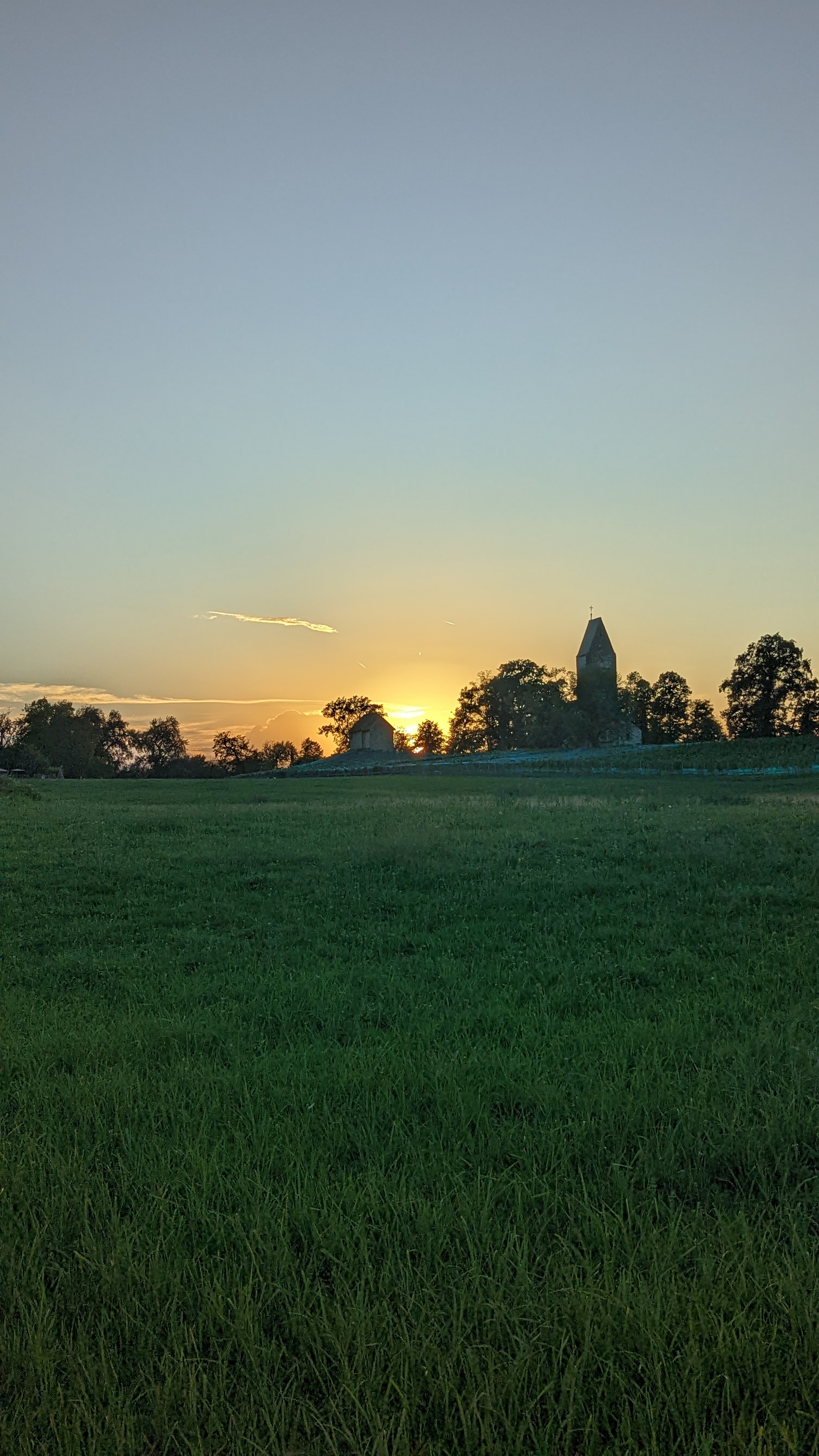
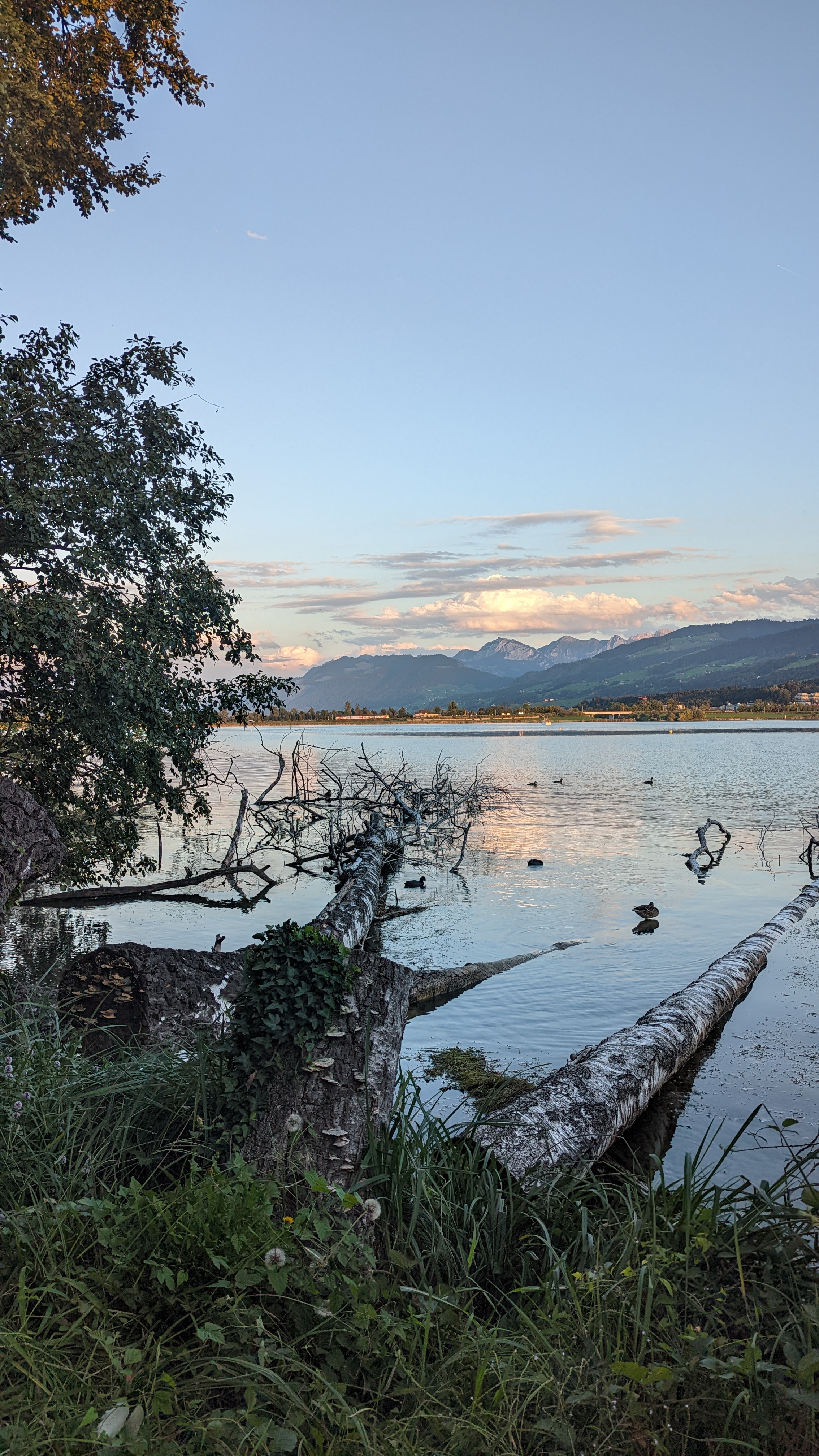
In the evening, we hopped on a little boat heading to Zurich and enjoyed the sunset over the mountains.
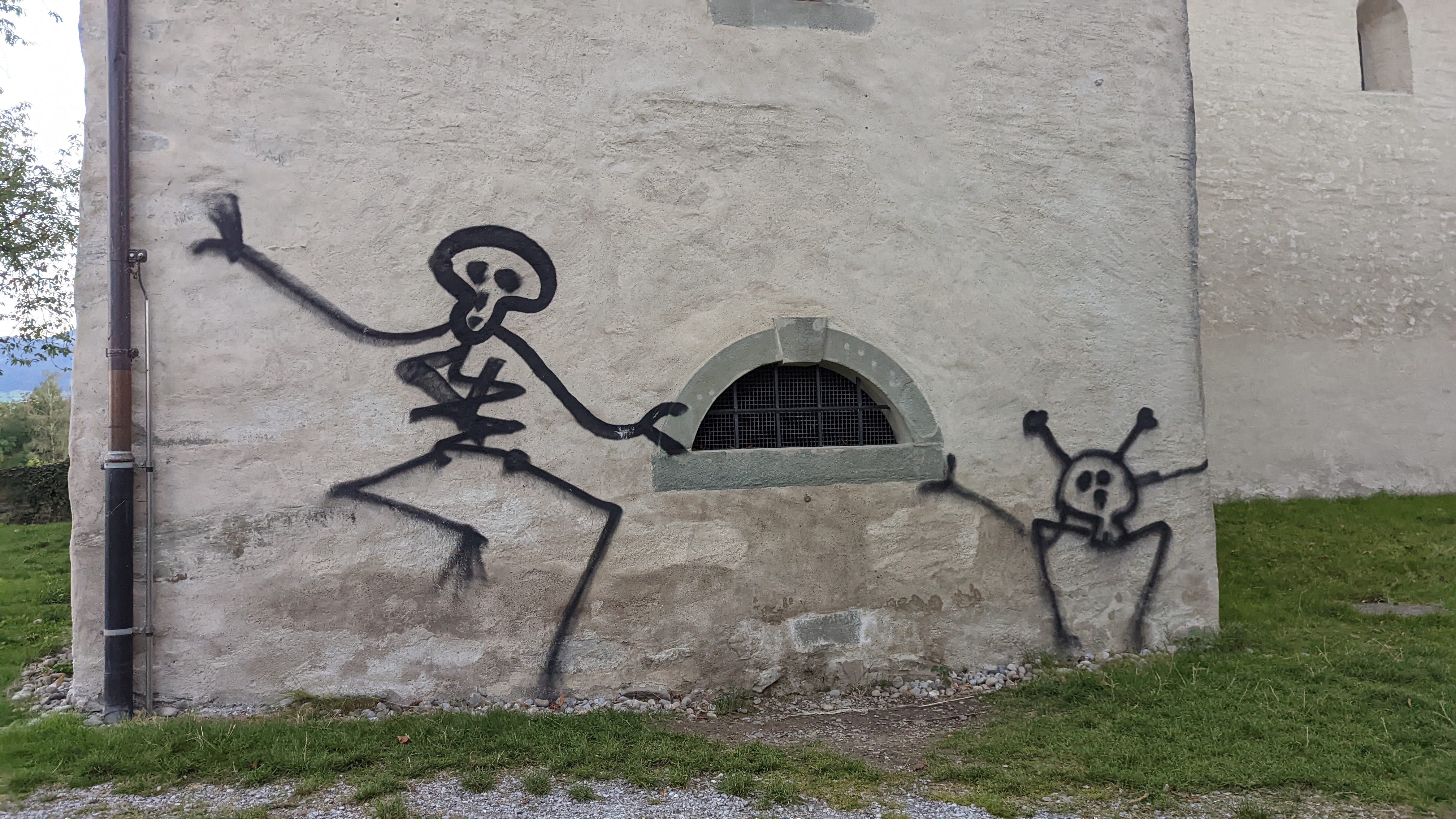
Ufenau Island and Lake Zurich

The way home to Baar and transport apps
Our little boat was arriving in Zurich at ten in the evening, and I still had to get to the train station, and from there it's half an hour to Baar. Would be nice to do it faster! Got off the boat a little after nine in Horgen. Google Maps seemingly told me that from there it was an easy and fast trip home. My phone was dying, I was hungry and tired, and my brain wasn't working too well. I went into a shop to buy some munchies, but nothing appealed to me. In the end, I grabbed an analog of Garik's sawdust, but in liquid form right away, in a bottle. It's called "This is food," which is generally logical and in the spirit of Artemy Lebedev (let's not invoke his name at night). But the taste is so-so, a bit boring.
When I got back to the station, I realized my phone had died, and it would've been better to double-check the route. Stared blankly at the paper map on the station wall for a long time. Just as I started to comprehend something, I heard a characteristic noise. I looked back and saw how, way up high on the hill, the train I needed was hauling ass full steam ahead to Baar. It flashed its windows and it was like it was never there. It reminded me of the series "Snowpiercer," where some characters also missed out on the train, and died on the frozen earth because of it. Fortunately, nothing like that threatened me.
It turned out that either Google or I made a mistake, and in fact I first had to get on a local train, ride to Thalwil, and from there transfer to Baar. Or drag myself a couple of hundred meters up the hill, there's a stop there too. While I was processing this, a local train heading in the right direction pulled up. I hopped in, still not really understanding if I was doing the right thing. In traveling, you have to know when such tricks work out and when they don't, and that comes with experience. In the end, half an hour later I was stomping home through Baar, still taking the long road, rather than through the cemetery, as I did at the end of our stay.
Only later I found out that Google doesn't always update train schedules in time, and it's better to use the SBB transport corporation's app. The app works quite decently, though not entirely intuitively. You can also buy tickets in it, and there's even an "automatic trip" mode, where they charge you exactly for how much you rode. Don't know how this magic works, didn't have a need for it, but it sounds futuristic. There are similar local apps for tourists (SwissTopo) and for checking the weather (MeteoSwiss).
Useful.